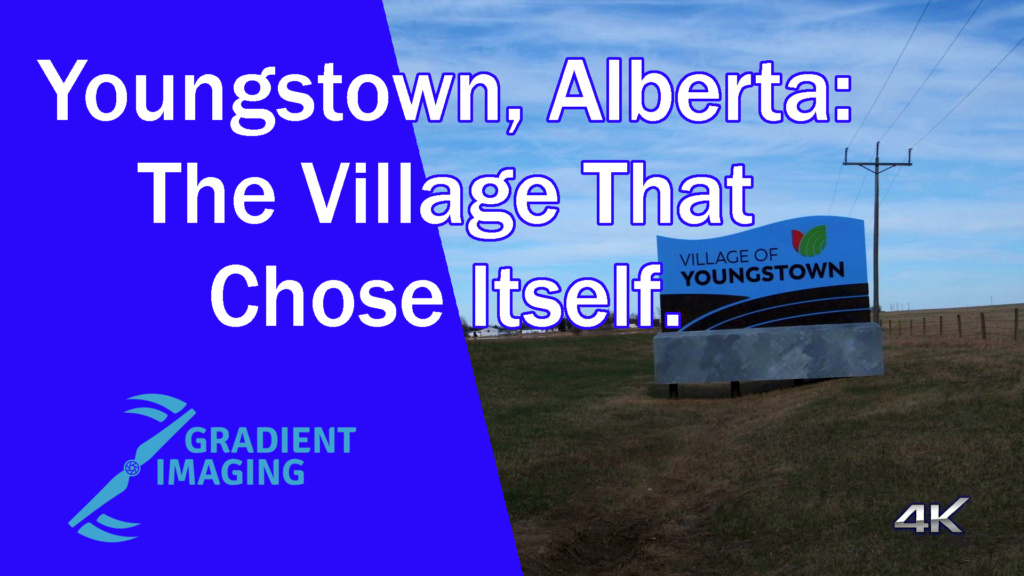
There’s a moment on Highway 9, somewhere southeast of Hanna, where you stop thinking about the drive and start noticing the land. The grasslands open up in that particular way southern Alberta does; wide, quiet, the kind of sky that makes you remember why people settled here in the first place. Youngstown sits right in that stretch, a village of 171 people nestled into the Special Areas of southeastern Alberta. Population: small. Presence: bigger than the numbers suggest.
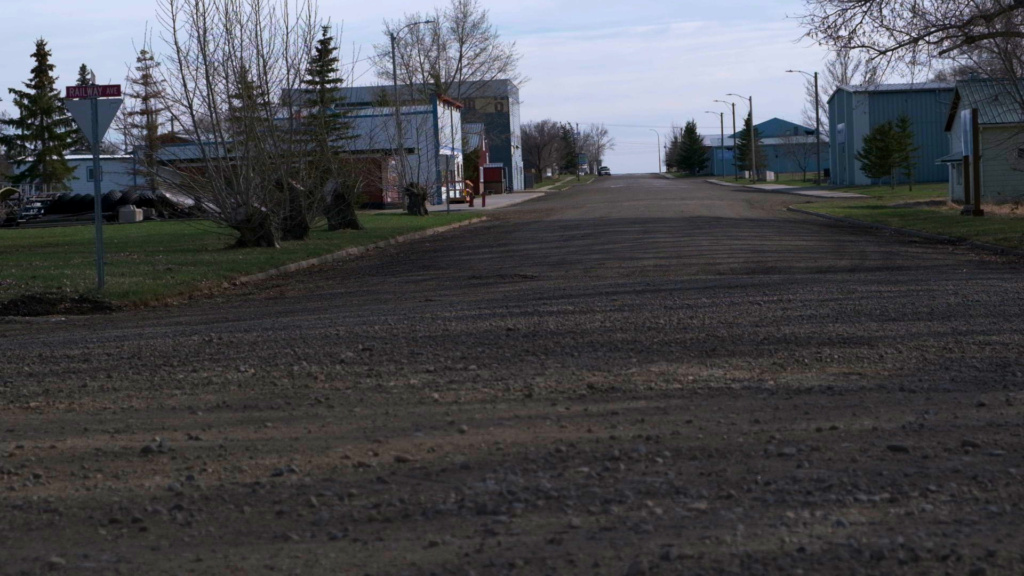
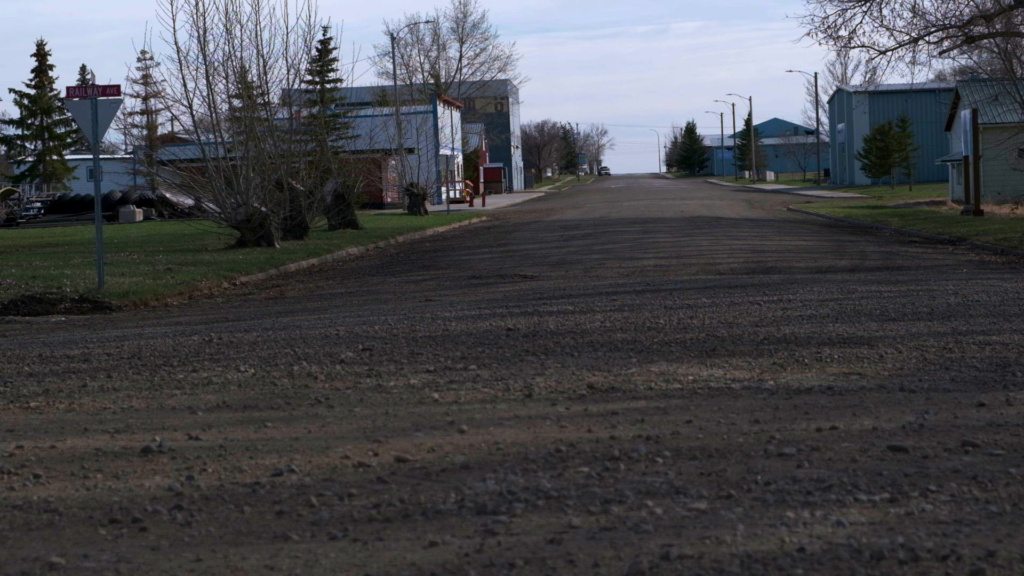
The first thing you notice is the quiet. Not the absence of sound, but the quality of it, wind through grass, the occasional truck on the highway, a dog barking from somewhere behind a fence. The buildings are modest: a library, a municipal office, a handful of houses spread out with the kind of breathing room you only get in places where land still matters more than density. Sounding Creek runs nearby, and the terrain rises and falls gently, like the land itself is still figuring out what it wants to be.
It doesn’t look like much at first glance. But Youngstown is one of those places where the real story lives in the dates and the decisions, not the Instagram moment.
The Boom and the Honest Contraction
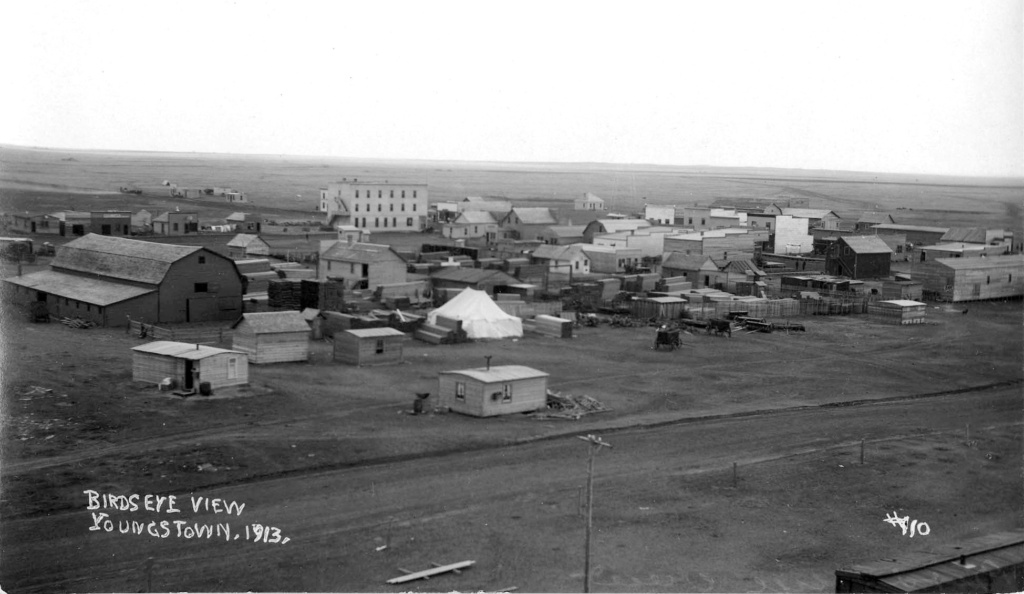
In 1913, Youngstown officially became a village. That timing wasn’t random. The Canadian National Railway had just pushed through in 1912, a single connection that transformed the calculation for every farmer in the region. Suddenly, wheat wasn’t just something you grew. It was something you could sell. Between 1901 and 1911, the entire Special Areas region exploded from 75 people to over 13,000. Everyone was betting on the same thing: the land, the grain, and the railroad.
By 1921, Youngstown had grown enough to become a town. It felt permanent. It was the kind of moment when you might have believed the trajectory would keep climbing forever, the way people do when everything is working.
Then 1936 arrived. On December 31st of that year, Youngstown reverted back to village status.
What’s honest about this is that it wasn’t a failure. It was a reckoning. The 1930s had been brutal here—the depression combined with drought that carved up the prairies like old scars. The Special Areas Board was created in 1959 specifically because the region had come so close to breaking. Youngstown couldn’t sustain the machinery of a town. So it didn’t pretend to. The people stayed. The farms stayed. The work stayed. Everything else adjusted.
What Stays
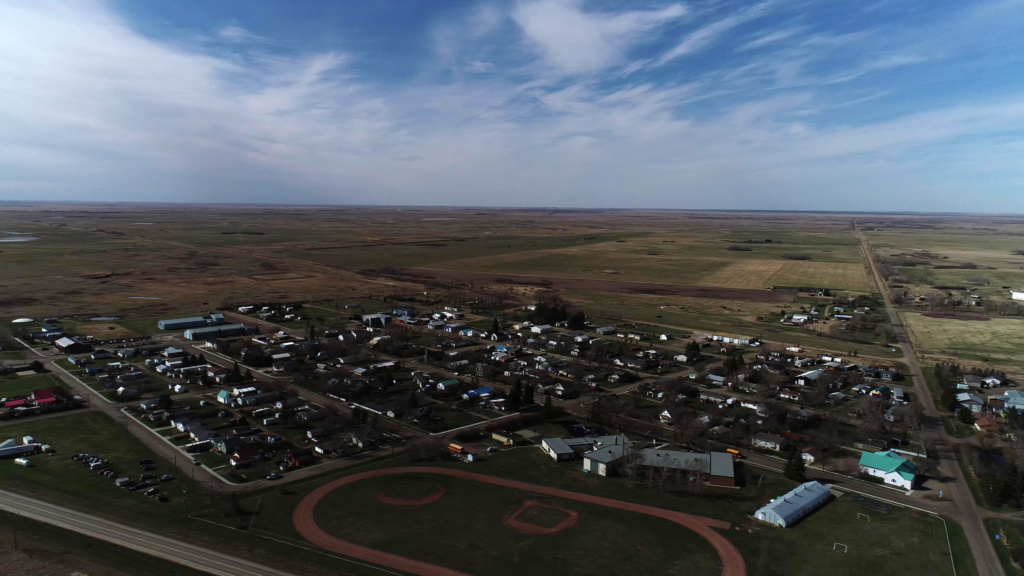
Today, agriculture is still the backbone. You drive through and see the evidence in the landscape—cultivated fields, grazing land, the infrastructure of a farming community that’s learned to be efficient with itself. There’s energy sector work. Carpentry, automotive trades, and the kind of labour that keeps a place functioning. And recently—this is the part that made me smile—fibre internet arrived. That strange, almost absurd modern miracle that means someone in Youngstown can work anywhere in the world, as long as they’ve got a good enough connection.
The village calls itself Sportsman’s Paradise, and it’s not a marketing claim. The hunting and trout fishing in the surrounding country is genuinely good. People come here for that. They come for the wide open spaces and the fresh air, and they’re not looking for irony when they say it.
There’s a permanence to Youngstown that has nothing to do with size. It’s the permanence of people who chose to stay when staying wasn’t automatic, who understand their community because they’re part of its actual functioning. You can see it in small things—the library still matters here, the local council still makes decisions that affect real lives, the decisions people make about where to live still reflect something genuine.
A village of 171 people. Big enough to have a story. Small enough that the story is still being written by people who live there.
That’s worth noticing.