Daysland sits quietly in east-central Alberta, about an hour southeast of Edmonton, just far enough off the main highways that you don’t end up here by accident. You arrive on a stretch of prairie road that feels open and unhurried, where the land flattens out, and the sky does most of the talking. The town reveals itself slowly, a few blocks, a grain elevator silhouette in the distance, and streets that feel laid out with intention rather than urgency.
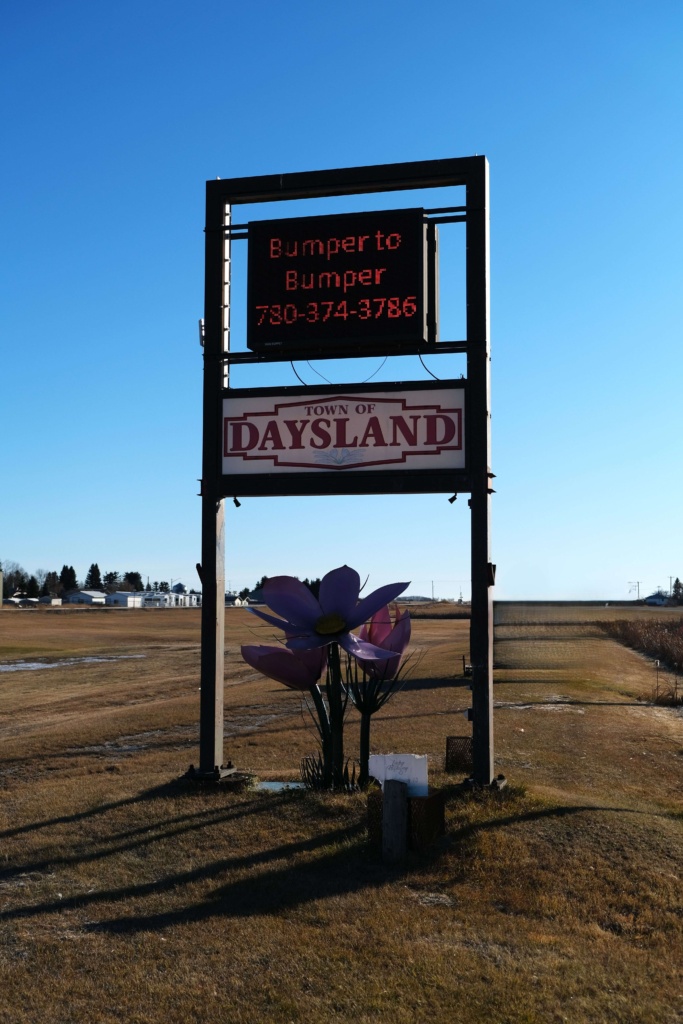
The first impression is calm. Not empty, not frozen in time, just settled. Houses face wide streets. Trees break up the horizon. It feels like a place that expects you to slow down without asking you to.
Daysland’s story starts in 1904, when Edward W. Day purchased land from the Canadian Pacific Railway with the goal of creating a farming community on the prairie. When the railway reached the area in 1905, settlers followed quickly, and by 1907, the town was incorporated, with Day serving as its first mayor. Like so many prairie towns, Daysland grew around agriculture and rail access, not as a boomtown, but as a service hub meant to last.
Driving through town today, you can still feel that original purpose. This was a place built to support the surrounding farms, and it still does. The hospital and health care centre serve not just the town, but the wider rural area. The school runs from kindergarten through Grade 12, a quiet sign that families are still putting down roots here rather than passing through. These aren’t relics, they’re working parts of daily life.
One of the town’s small standouts is the Palace Theatre. It’s not flashy, and it doesn’t try to be. It’s just there, still in use, still part of the community rhythm. In a lot of towns this size, buildings like that have gone dark or been repurposed. Here, it remains a gathering place, which says more about Daysland than any population statistic ever could.
Then there’s the Crocus Trail, winding its way through town. It’s a simple thing, a walking path maintained largely by volunteers, but it reflects something consistent you notice in Daysland: people quietly taking care of the place they live. No big announcements, no spectacle. Just upkeep, year after year. There are little moments that stick with you while driving through. A handwritten sign outside a local event. Well-kept yards that suggest pride more than obligation. Grain trucks moving through town at a pace that feels cooperative rather than rushed. Daysland doesn’t perform “small town,” it just lives it.
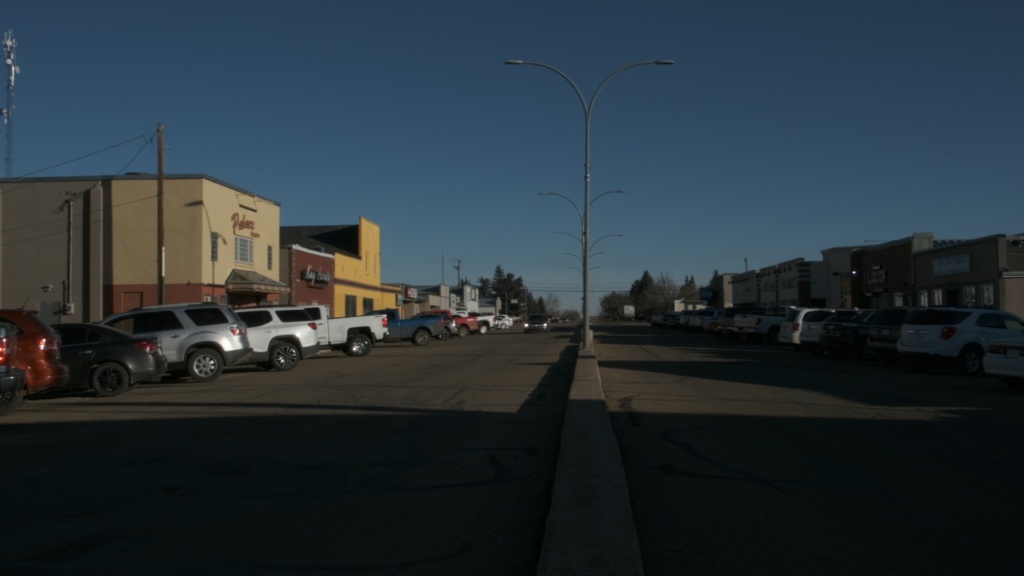
Like many prairie communities, Daysland has seen its population shift over time, sitting at around 800 people in recent years. But it hasn’t hollowed out. It hasn’t turned into a stopover or a memory. It’s adjusted, tightened its footprint, and kept the pieces that matter.
Leaving town, you get that familiar feeling small towns tend to leave you with, not excitement, not sadness, just a quiet appreciation. Daysland isn’t trying to be discovered or reinvented. It exists because people chose to build something here, and others chose to stay. That continuity is easy to miss if you’re only passing through, but once you notice it, it’s hard not to respect it.
Daysland doesn’t ask for attention. It rewards it.