
Bruce, Alberta, sits quietly along Highway 14, about an hour east of Edmonton, easy to miss if you’re not paying attention. There’s no big sign announcing itself, no reason to slow down unless you already know it’s there. But once you do slow down, the place has a way of gently asking you to stay a moment longer. The land is open, flat in that honest prairie way, and the town feels tucked into it rather than imposed on it.
The first impression is how small it is and how comfortable it seems being that way. A handful of buildings, a few side streets, and a sense that nothing here is pretending to be bigger than it is. It feels like a town that knows exactly what it’s for.
Bruce began in the early 1900s, shaped by the same forces that built so many prairie communities: farming, rail lines, and communication infrastructure. It was originally called Hurry, but in 1909, the name was changed to Bruce, honouring A. Bruce Smith of the Grand Trunk Pacific Telegraph Company, a reminder that wires and railways once meant survival out here, not convenience. Like many towns along the prairies, Bruce grew because the land could be worked and because people needed places to trade, gather, and rest.
One of the town’s anchors is the Bruce Hotel, established in 1910 and still operating today. That alone tells you something. Prairie hotels weren’t built for luxury; they were built for warmth, meals, and conversation. Walking past it now, you get the sense it’s seen more than a few muddy boots, long days, and quiet celebrations. It’s not a relic; it’s still part of daily life.
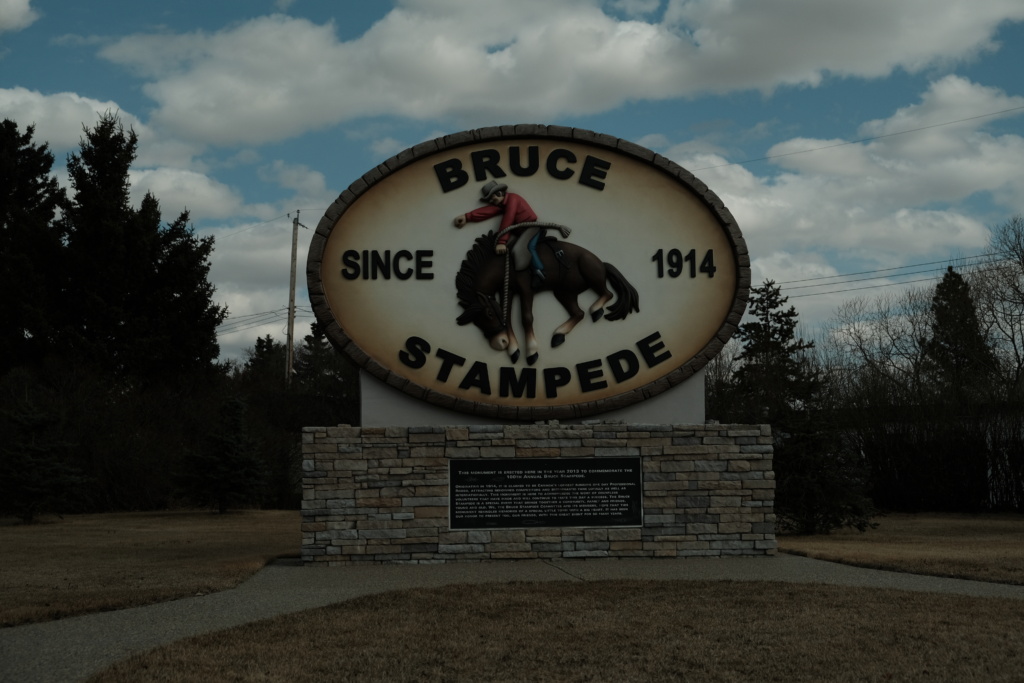
Then there’s the Bruce Stampede, first held in 1914. It’s known as Canada’s oldest one-day rodeo, which sounds impressive — but what really matters is that it’s still happening. Every July, this tiny hamlet briefly swells with visitors, trucks, trailers, and dust, all for a tradition that’s been handed down for over a century. For one day, Bruce isn’t quiet at all.
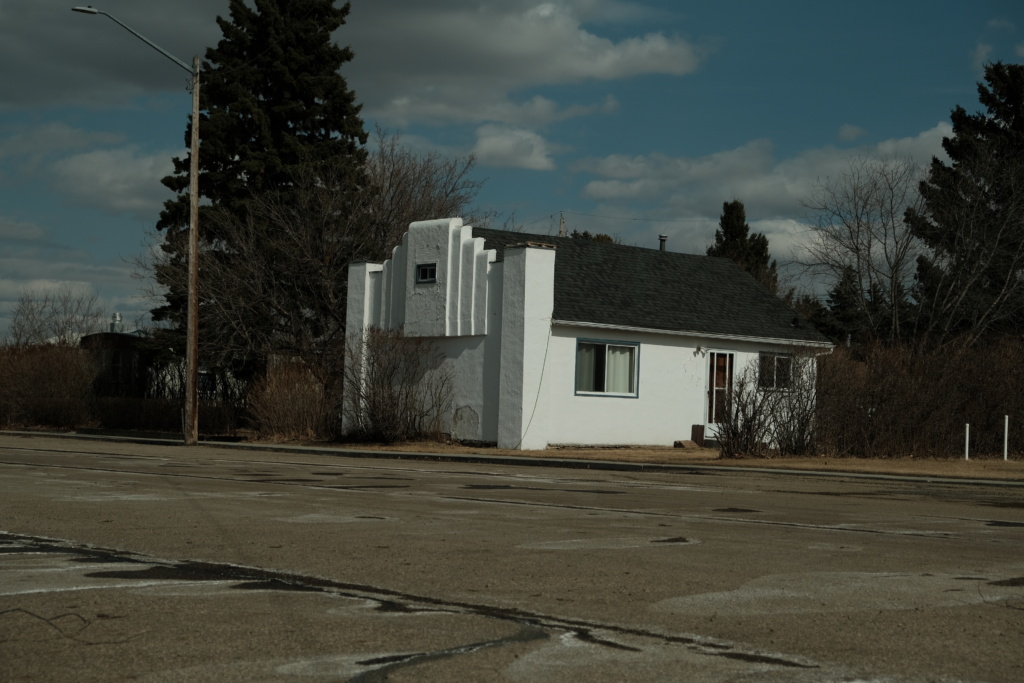
One small detail I love: the community hall doubles as a library pickup point through the Holden Municipal Library system. It’s such a practical prairie solution; knowledge doesn’t need its own building, it just needs a place people already trust. That says more about the town than any population statistic ever could.
Driving through Bruce feels less like passing through a town and more like briefly intersecting with someone else’s routine. Someone lives here year-round. Someone opens the hotel doors every morning. Someone organizes the Stampede, knowing exactly how much work it takes. Bruce isn’t frozen in time; it’s just moving at its own pace.
Today, only a few dozen people officially call Bruce home, but the town still carries the weight of its past without showing off. It’s proof that continuity matters more than growth, and that some places don’t disappear; they simply get quieter, waiting for the next person to slow down and notice them.