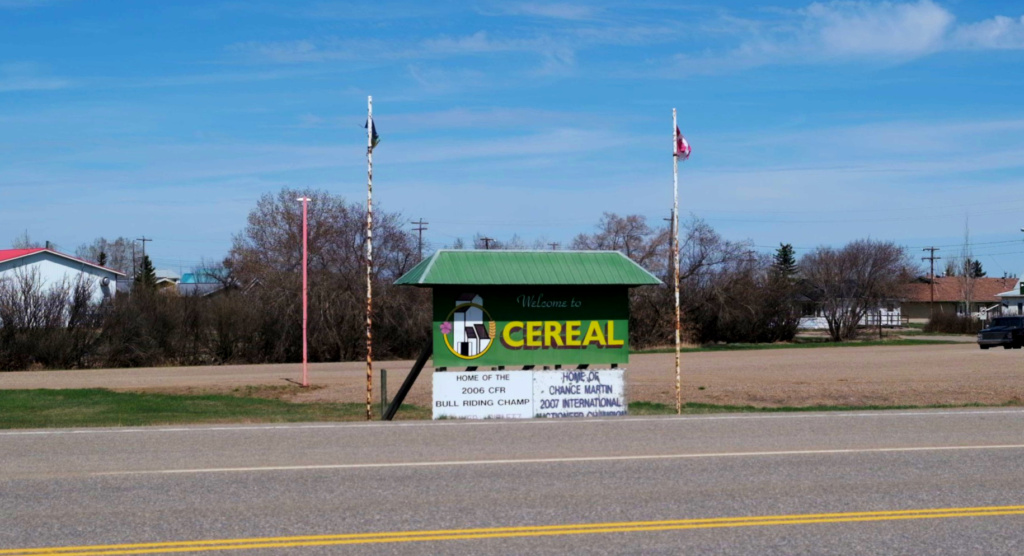
You come into Cereal from Highway 9, and the first thing you notice is that it’s not pretending to be anything it isn’t. There are no grand welcomes, no “historic district” painted on every storefront. Just a small hamlet sitting on the open prairie, 100 miles east of Drumheller, with about a hundred people who’ve chosen to stay.
The landscape here is pure Alberta, flat enough to see the weather coming, the kind of place where you understand why people named a town after what grew in the fields. But Cereal wasn’t called that because farmers were whimsical. A post office arrived in 1910, and someone practical just looked at the grain fields around them and said, that’s what this place is. The name stuck because it was honest.
Two years later, the Canadian National Railway built a station. That building, still standing, now the Prairie Pioneer Museum, was the anchor. From 1912 onward, the station was the heartbeat of the town. Farmers brought wagons full of grain to the railway, and the railway sent it out into the world. For the better part of a century, that was the whole rhythm: plant, harvest, haul, ship, repeat. It was a system that worked, and Cereal worked inside it.
There are photographs from the 1920’s of Main Street, actual storefronts, buildings with intention, a place moving forward. You can still recognize some of the landmarks in those old images. The Haines house is one. It’s a small detail, almost trivial, but standing on the same patch of prairie and seeing a building that’s been here long enough to appear in century-old photographs, that’s when you understand that small towns aren’t abstract concepts. They’re places built and rebuilt by people who decided to stay, who invested their lives in grain and commerce and community.
What gets you about Cereal now, though, is the honesty of its contraction. The elevators are mostly gone. The railway traffic thinned decades ago. In 2021, the town made a practical choice: it dissolved from village status and became a hamlet. That sounds like failure if you’re not paying attention, but it’s actually something quieter. It’s a place choosing to acknowledge what it is, rather than what it was.
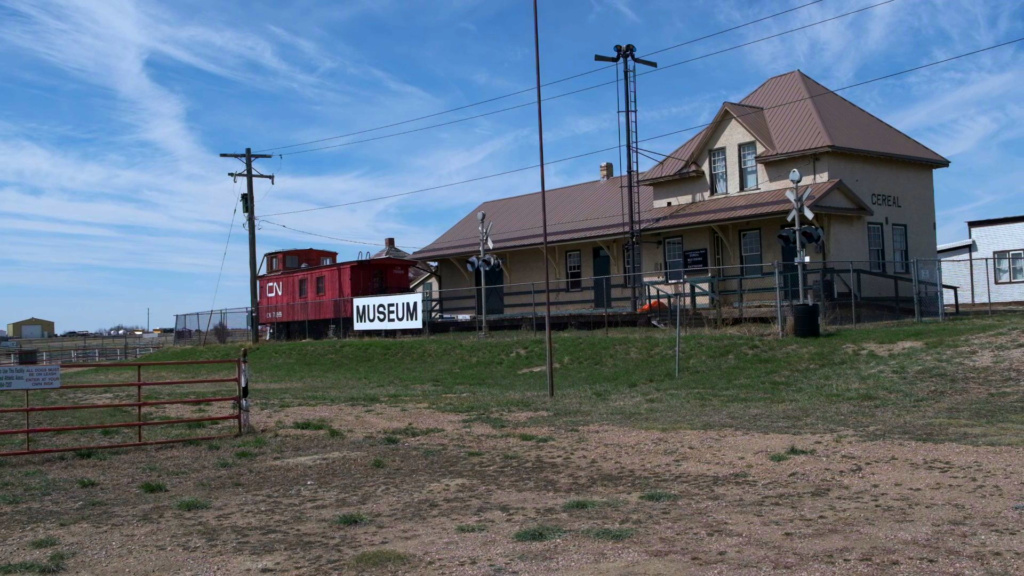
The Prairie Pioneer Museum sits at the edge of town, housed in that original 1912 station. Inside, there’s a caboose. The old jail from Chinook. A miniature grain elevator in a small park where the real ones stood, a memorial, not a monument. The displays are full of the everyday objects that pioneering families left behind: tools, photographs, the small evidence of ordinary lives lived in extraordinary circumstances.
What strikes you, walking through the museum and then back onto the prairie, is that Cereal didn’t erase itself. It transformed. There’s still a ball diamond. Rodeo grounds. A campground. People gather. The town is smaller, yes, but it kept what mattered.
That feels like something worth remembering.